|
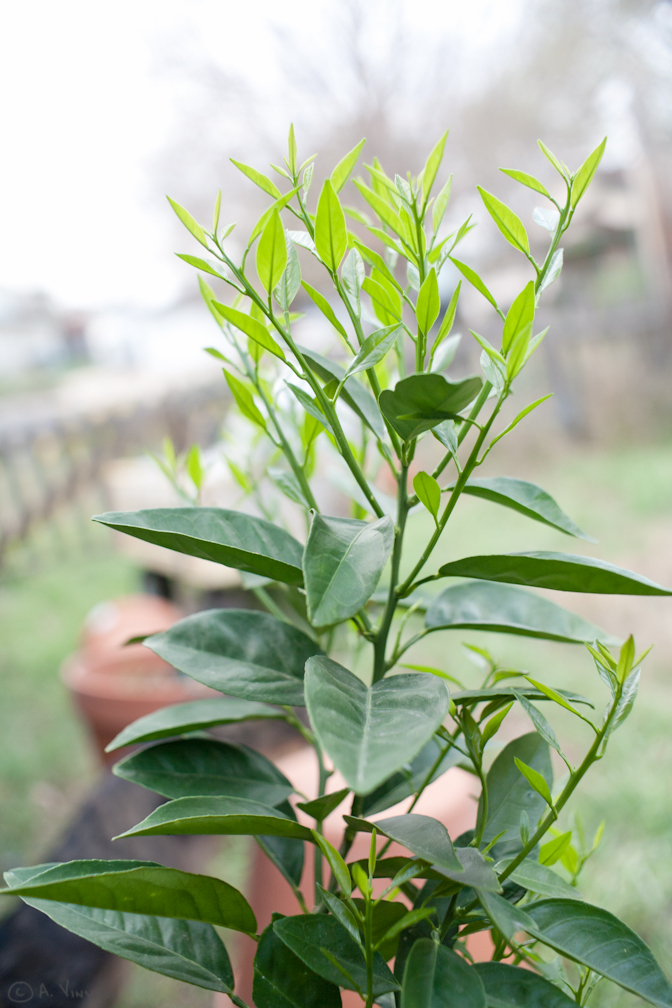
| Clementine: Canon 5D, 85mm f/1.8 USM |
Well, December is finally here. It's the Holiday season as well as the citrus season. I picked my first clementine mandarin today. It's also know as the Algerian orange. These aren't your grocery store cuties, although I wouldn't complain if they were. Those are generally Nules Clementines, which are related, but not the same. I haven't been able to find Nules Clementine in Texas.
I guess I should preface that I live in Austin, TX, and part of this blog will be chronicling my successes and failures at trying to grow citrus here. Citrus, in general, are easy, so hopefully, there will be more successes than failures. The biggest challenge is the weather. Austin lies at a transition zone, climate wise. Citrus North of here is pretty much north of here is pretty much bound to fail. As you go progressively south, things become increasingly favorable, the Rio Grande Valley being the heart of the Texas citrus industry.
I've had my clementine tree for about 3 years, and it was probably about a year old when I got it. It spent its first year in a pot and its first winter in the garage, along with all my other citrus. The garage did not work out so well, so most of my citrus, including this tree were planted in the ground on the southeast side of the house, where the micro-climate should theoretically be the warmest. So the tree is 4 years old and this is its second season in the ground. It produced a few clementines,which were smaller and tastier than this batch, that first year in the pot. I had none last year. This year I had 9 fruit which were about tennis ball sized, maybe a wee bit smaller.
 |
| Meet Clementine: Canon 5D, Contax Zeiss 135mm f/2.8 |
The little squiggles on the fruit are leaf miner trails. A moth lays and egg, the larva hatches and burrows under the surface and eats til it is mature. Usually they attack the leaves and not the fruit, but not this year apparently. This is the first time that I have seen any evidence of them since the big freeze two years ago. It apparently killed off the larva that were chilling in the soil waiting for spring, and they are only just now making their way back from warmer climates. Leaf miners generally don't cause much trouble. They just make things a little uglier. This fruit is perfectly fine inside.
 |
| Leaf Miners: Canon T2i, 40mm f/2.8 STM |
 |
| Canon T2i, 40mm f/2.8 STM |
The one below and on the right is the one I picked.
 |
| The one I picked: Canon 5D, Contax Zeiss 135mm f/2.8 | | |
So naturally, I brought the one I picked inside, and we did a photo-shoot.
 |
| "That's right, smile for the camera, Darlin'!": Canon 5D, 85mm F/1.8 USM |
|
|
 |
| It's what's inside that counts: Canon 5D, Olympus OM Zuiko 28mm F/2 |
And then I cut it in half to see what was inside; Disappointment. So it wasn't bad, it just wasn't anything special. It was juicy, but not running-down-the-side-of-your-arm juicy. It was only slightly sweet, and there was no acidic tang at all. The best was to describe it was: bland. It was also full of seeds. I counted 19. I figured it wouldn't be seedless. Seedless is a product of both genetics and monoculture, neither of which I have. I did, however, hope for a little better than this.
 |
| Canon 5D, 50mm f/1.4 USM |
 |
| 19 Seeds: Canon 5D, Olympus OM Zuiko 28mm F/2 | |
Despite my disappointment, I do remain hopeful for this tree. This is its first crop in the ground, and citrus trees usually produce better fruit as they age, so next year might be better, and maybe the year after that. More citrus reports to come. Is this enough citrus for you, Kai?